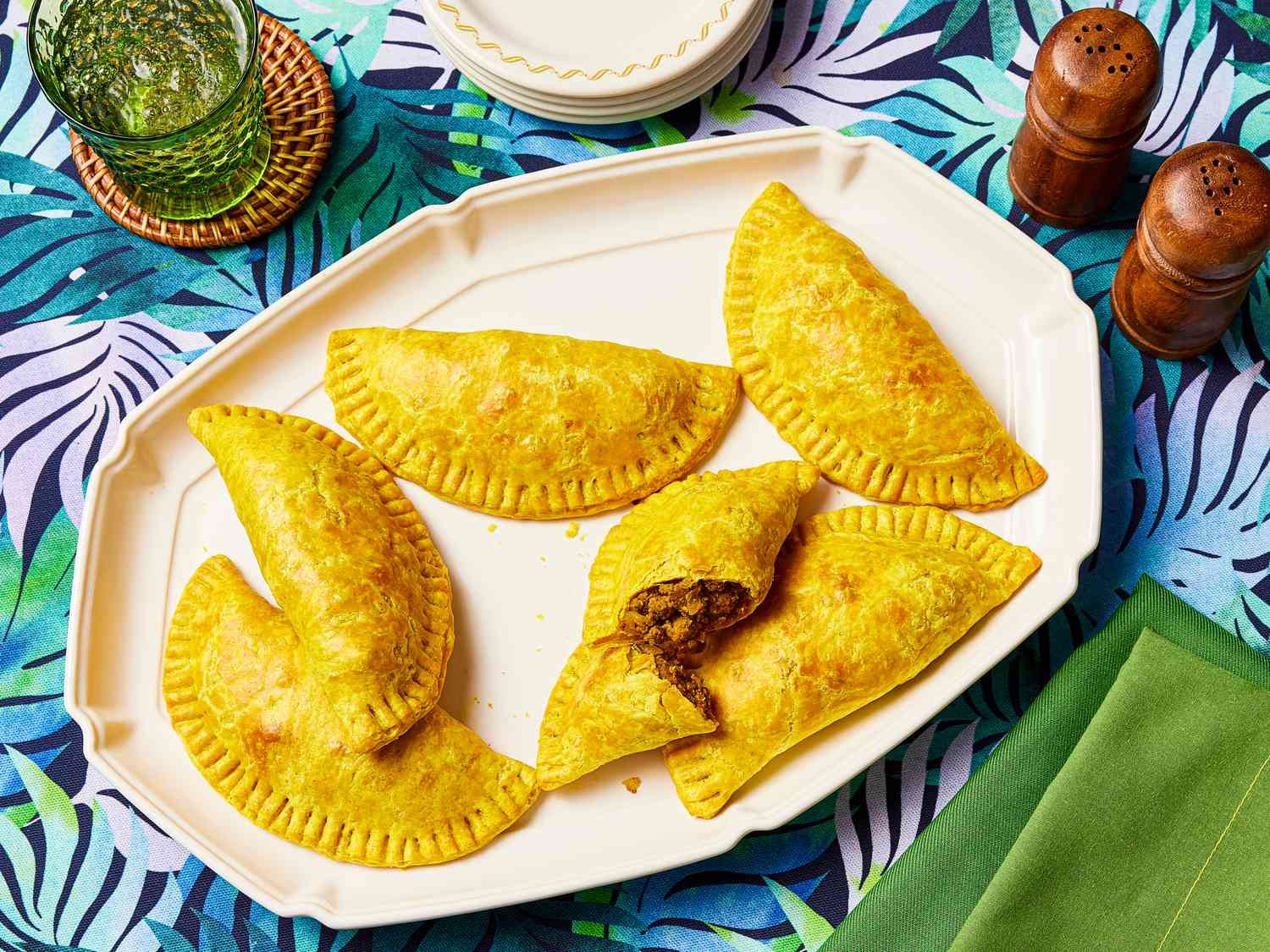

Today, I prepared Jamaican beef patties from scratch, beginning with the pastry dough and ending with the spiced beef filling enclosed in a golden crust. As I prepared them, I also spent some time learning where they originated and why they have become such a staple of Jamaican cuisine. This blog post presents the cooking process step by step, then dives into the dish’s history and cultural origins.
Cooking Process
From ingredients to golden perfection
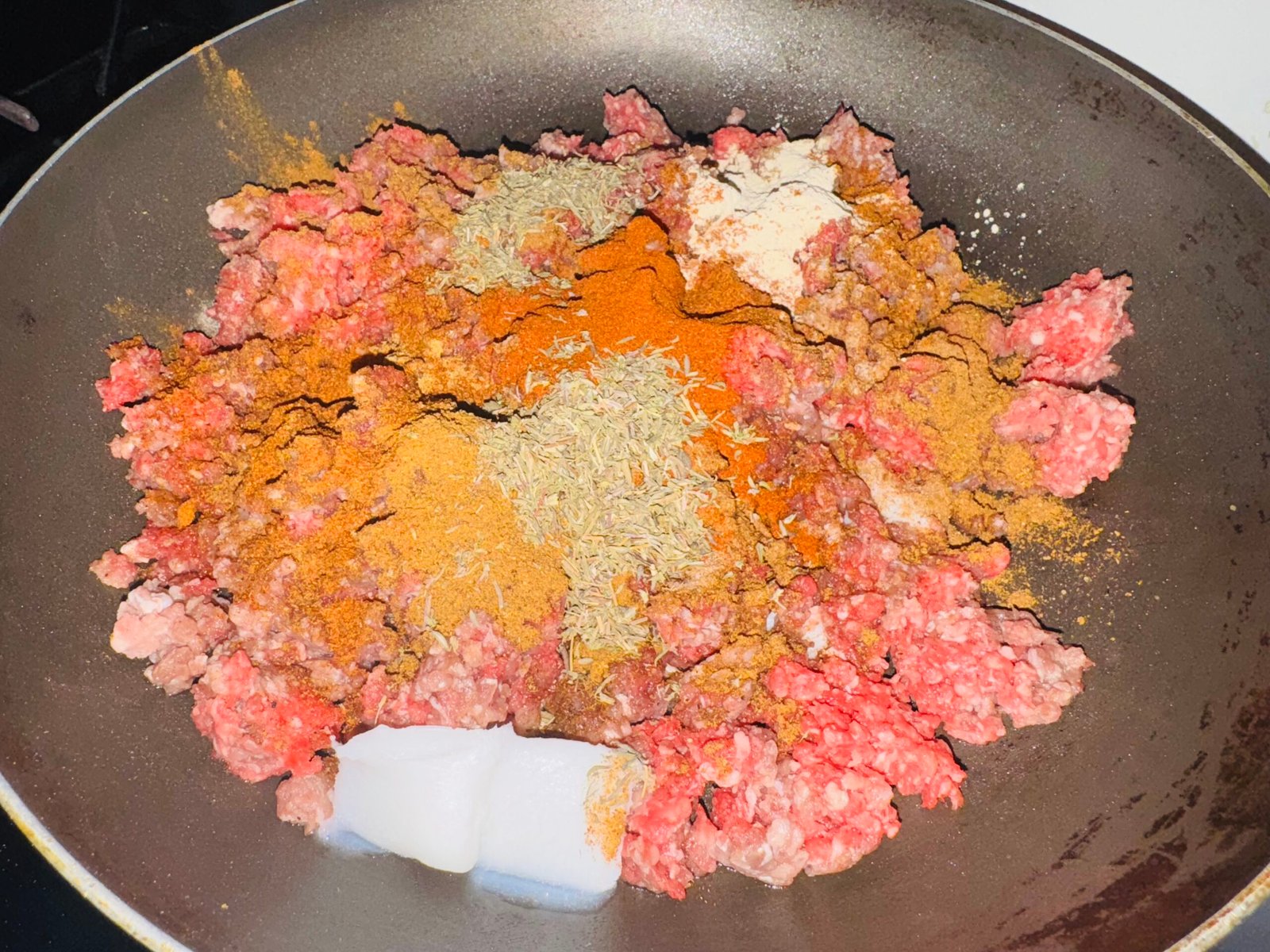
Seasoned Raw Beef
Ground beef in the pan with curry powder, paprika, allspice, and aromatic spices ready to cook
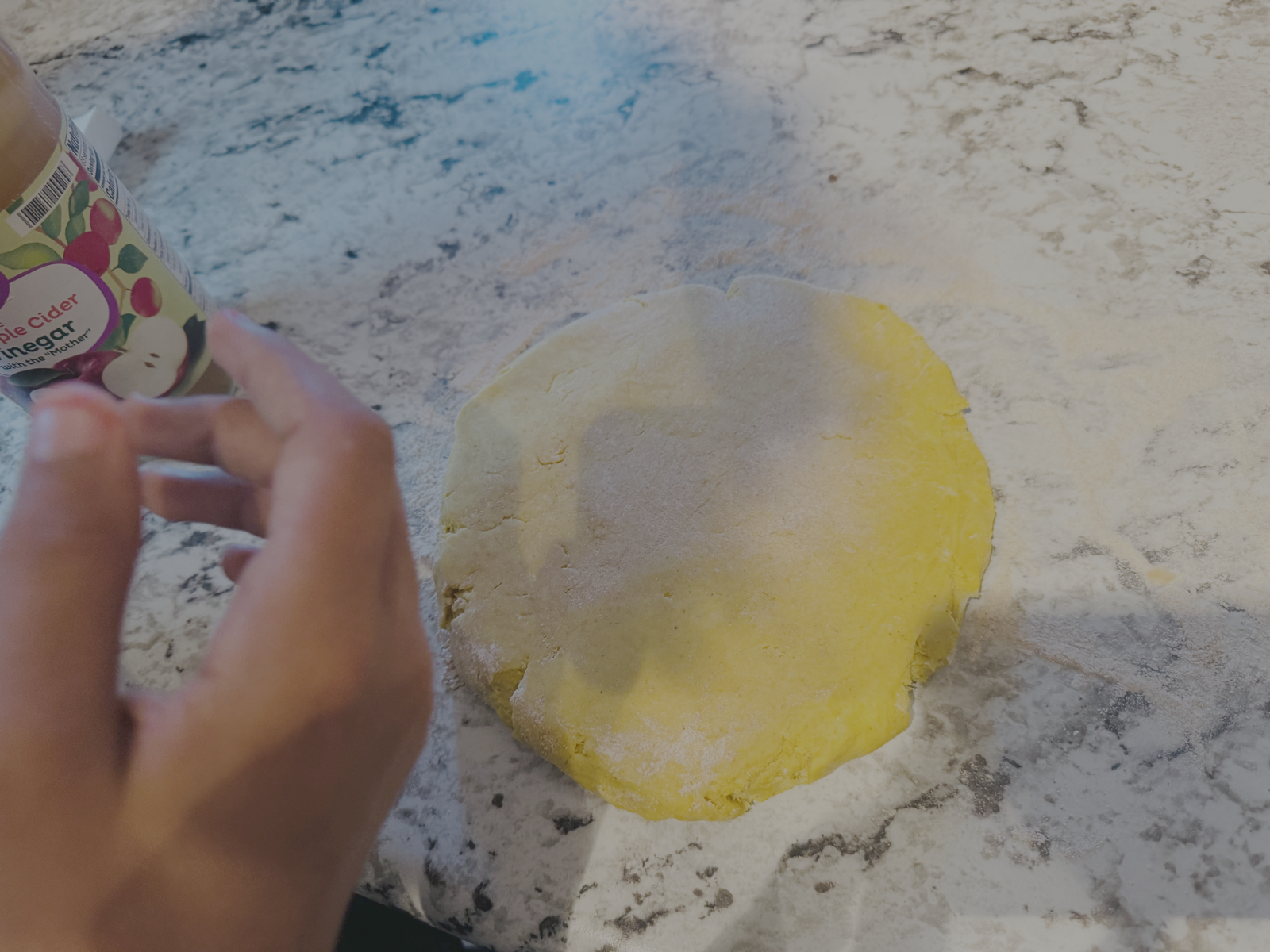
Rolling the Dough
The curry-spiced dough, chilled for 30 minutes, being rolled out to perfect thickness
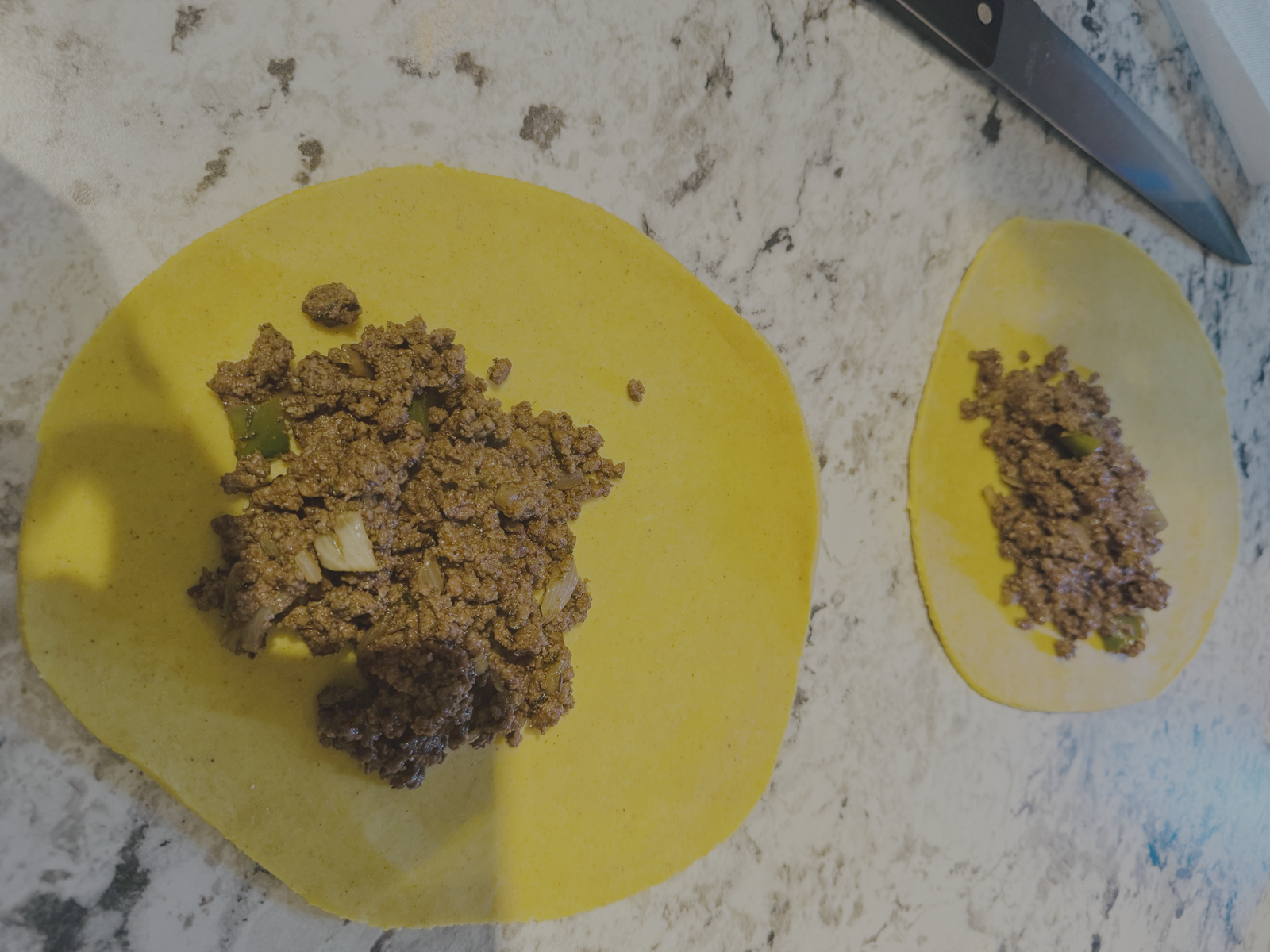
Adding the Filling
Cooked spiced beef filling spooned onto dough circles, ready to be folded into half-moons
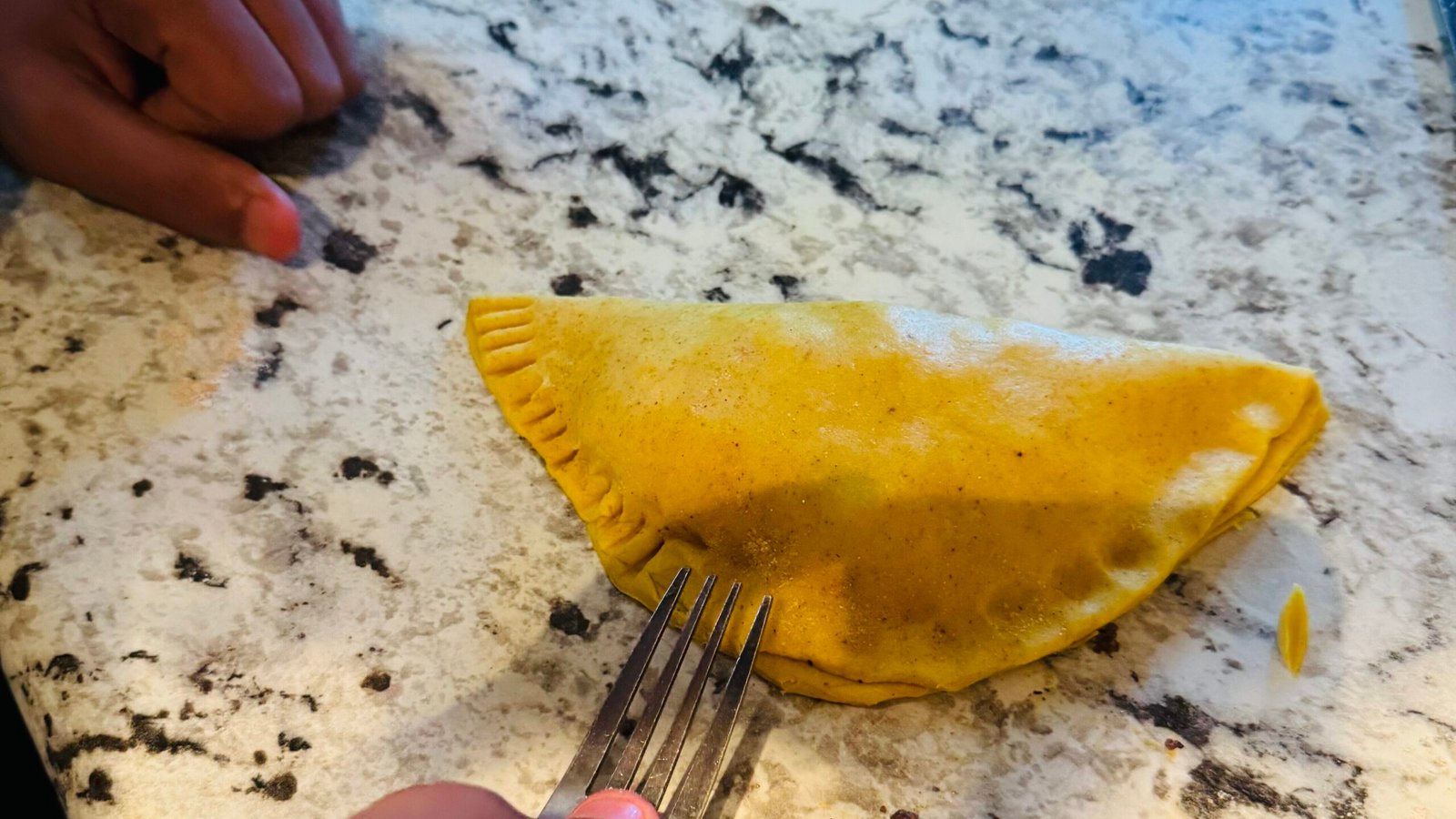
Sealing with Fork
Using a fork to crimp and seal the edges, creating the classic patty shape before baking
My Cooking Experience
The hardest bit was assembling the patties. Too much filling and they’d leak; too little and the bite wouldn’t be satisfying enough. Getting the fork crimps neat was oddly satisfying.
The curry spiced dough had an incredible aroma even before baking…the turmeric and curry powder combination really made the kitchen smell like a Caribbean restaurant. Rolling it out after chilling was much easier than I expected, though I did have to work quickly to keep the butter from getting too warm.
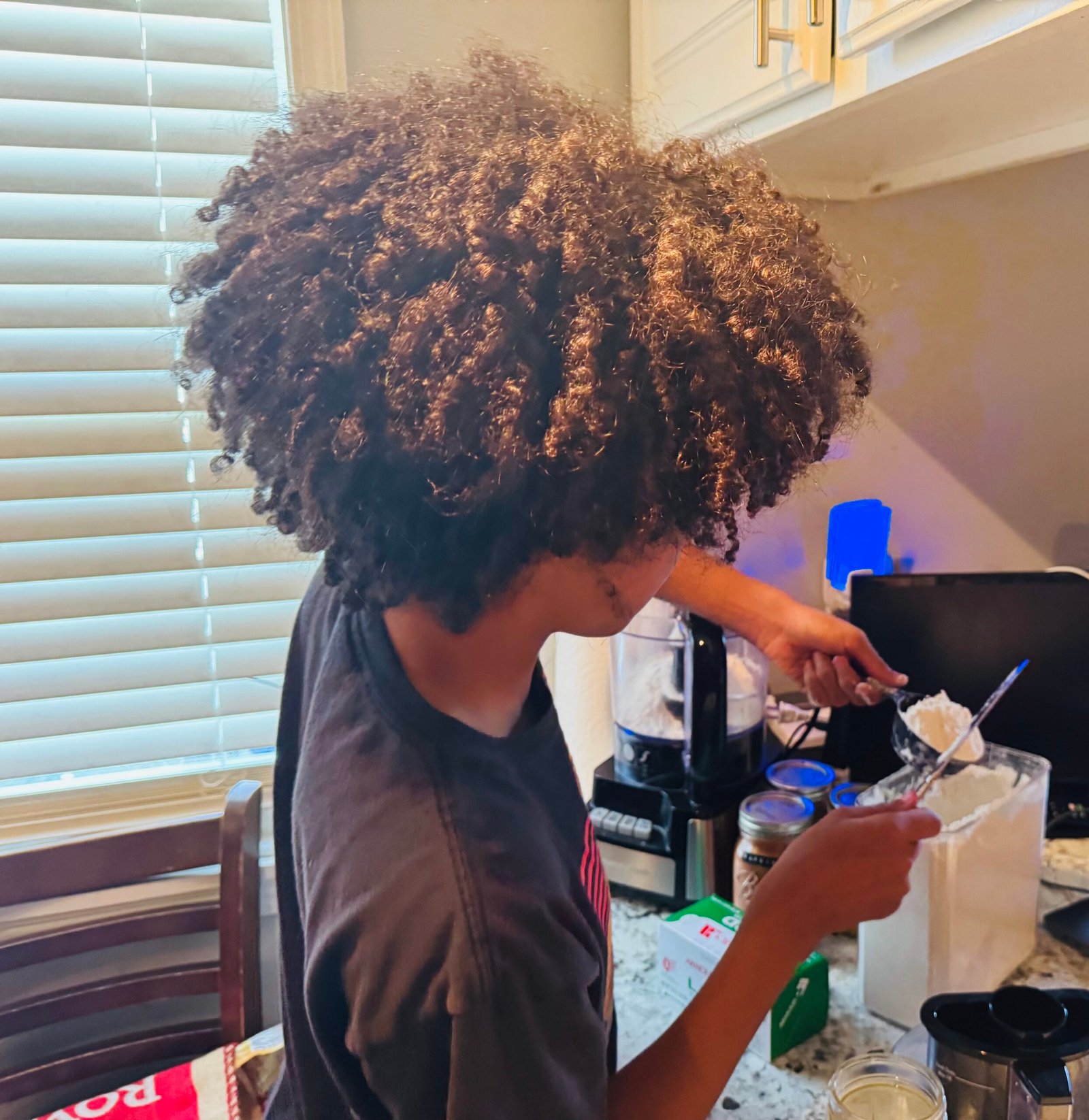
Preparing the dough
Jamaican Spicy Beef Patties
Makes 8-10 patties
Ingredients
For the Crust:
- 2 ½ cups organic all-purpose flour
- 1 tablespoon baking powder
- 1 tablespoon curry powder
- ½ teaspoon turmeric powder
- ½ teaspoon dried parsley
- ½ teaspoon dried thyme
- ½ cup salted butter, cubed and cold
- ½ cup salted butter, frozen and grated, divided
- 1 cup almond milk, very cold + 2 tbsp
For the Beef Filling:
- 1 lb organic grass-fed ground beef
- 2 tablespoons extra virgin olive oil
- ½ onion, diced
- 2 garlic cloves, minced
- ½ teaspoon minced ginger root
- 2 Scotch bonnet peppers, minced
- 2–3 fresh thyme sprigs
- 1 scallion, chopped
- 2 tsp “On Everything” All-Purpose Blend
- 1 teaspoon curry powder
- 1 teaspoon smoked paprika
- 1 teaspoon sea salt
- ½ teaspoon ground allspice
- 1 cup organic chicken stock
- 1 tablespoon browning sauce
- 1 tablespoon Jamaican hot sauce (optional)
- ½ teaspoon beef bouillon base (optional)
- 1 tbsp cornstarch + 3 tbsp warm water
Other:
- Egg wash (1 egg + 1 tbsp milk, whisked)
Instructions
- 1 Make crust: Whisk dry ingredients. Cut in cold butter until crumbly. Add cold milk, form dough. Wrap and chill 1+ hours.
- 2 Make filling: Season beef with spices. Sauté aromatics, add beef and brown. Add stock, simmer 10-15 min. Thicken with cornstarch mixture. Cool completely.
- 3 Assemble: Preheat oven to 375°F. Roll dough with remaining frozen butter. Cut circles, fill, seal into half-moons.
- 4 Bake: Brush with egg wash. Bake 20-25 minutes until golden. Cool slightly before serving.
Recipe Notes
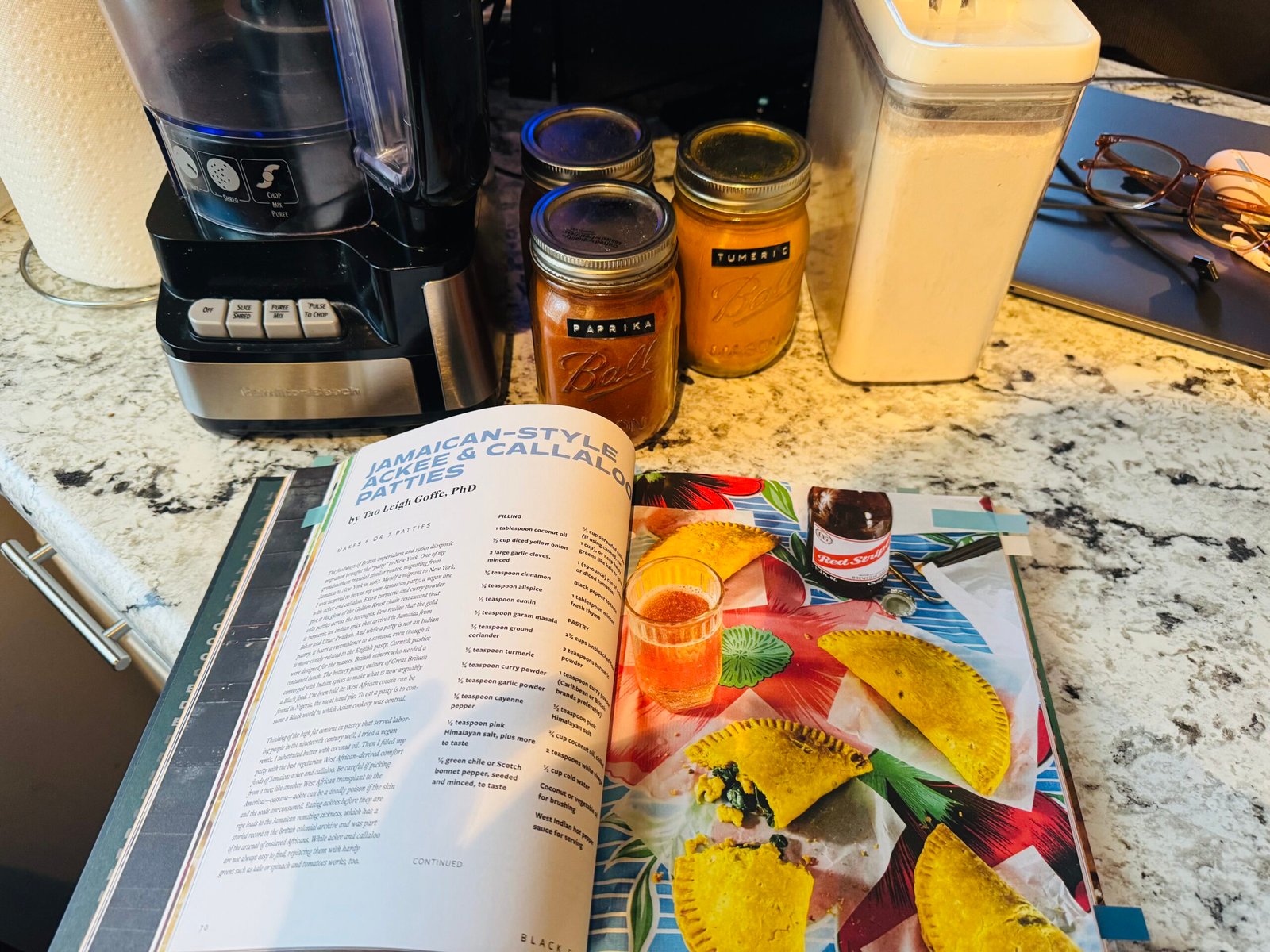
While we’ve been reading from The Black Food Cookbook, we chose not to use the vegetarian recipe from the book. This recipe is from Orchids & Sweet Tea for a more traditional Jamaican spicy beef patty.
History of Jamaican Beef Patties
Jamaican beef patties have numerous origins. Their flaky crust and convenient-to-hold form were derived from the Cornish pasty, introduced during British colonization. The vibrant yellow hue and spicy flavor are from Indian culinary practices introduced by laborers in the 19th century. African influence is reflected in bold spice blends, slow-cooked fillings, and the utilization of Scotch bonnet peppers.
The Shipwreck has a history that stretches back to the transatIantic slave trade. Enslaved Africans carried food preservation techniques, seasoning practices, and agricultural know-how that combined with available ingredients. Following the abolition of slavery in 1834, the British introduced Indian and Chinese laborers to Jamaica under harsh contracts, which further defined the island’s cuisine.
Migration facilitated the dissemination of the beef patty globally. During the middle of the 20th century, Jamaican immigrants introduced patties to New York, Toronto, and London, where they gained popularity as street foods. In Canada, the “Patty War” of 1985 involved officials attempting to control the term “patty” — a fight Jamaican vendors eventually won.
The crust took patience — the trick was to keep the butter cold. Folding frozen grated butter into the pastry developed a layered texture that baked into light, flaky pockets.
The filling was powerfully aromatic, with curry, thyme, and Scotch bonnet contributing heat and depth. Browning sauce contributed depth and savory nuance to the beef.
Reflection
Making these patties also taught me how many small techniques — from chilling dough to balancing seasonings — affect the final flavor and texture.
Discovering about their heritage only made me like them more. This is not just a dessert; it is a celebration of migration, resilience, and cultural fusion.
It carries the legacy of African, Indian, and European customs, and the struggle and intelligence of Jamaican people. Food like this reconnects us to history not just in writing, but taste. With every bite, it is at once a memory and a celebration.
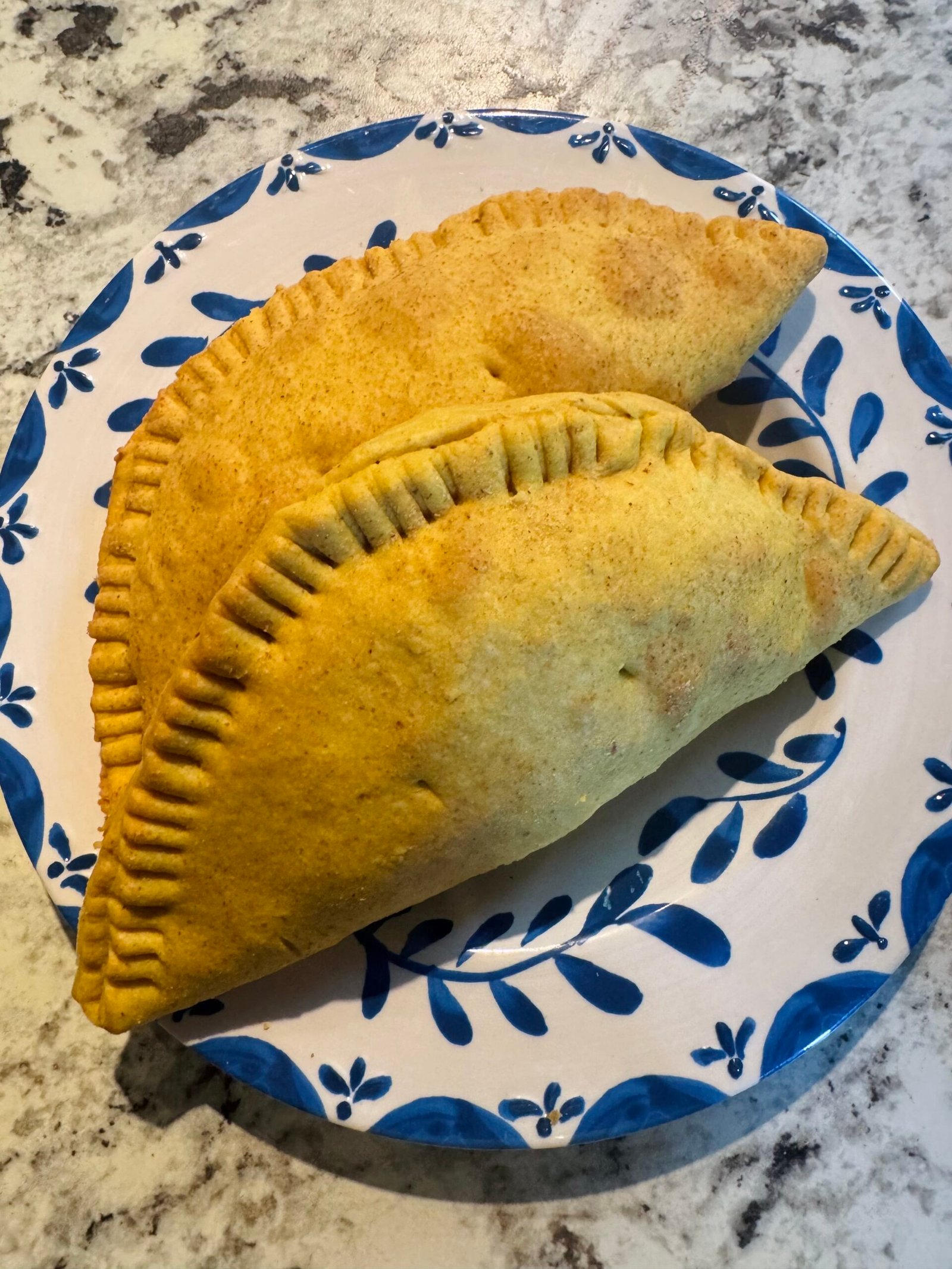
The golden finished patties
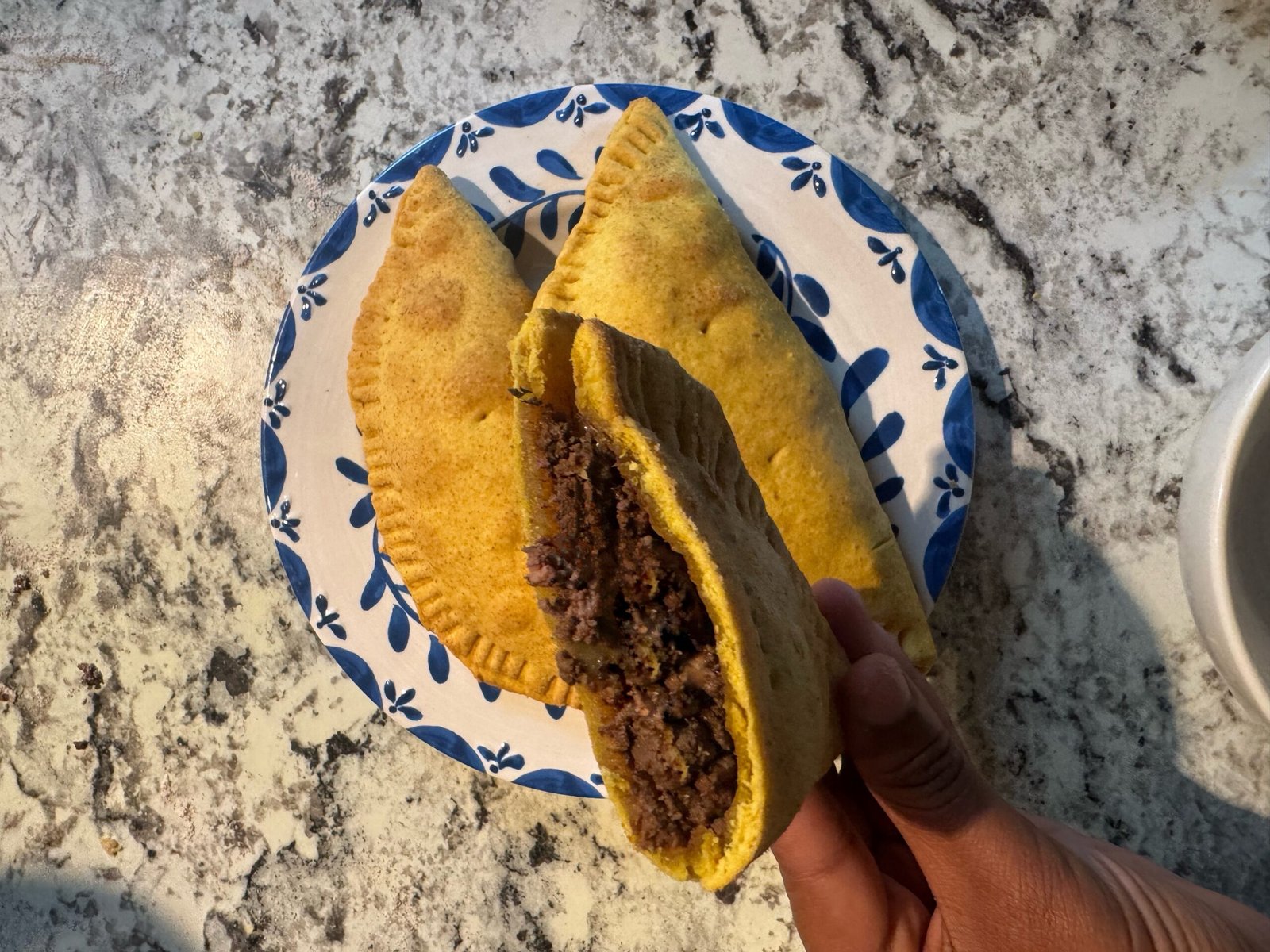
Revealing the spiced beef filling within